Eagle Mountain Foundation Pros
Wall Stabilization in Eagle Mountain, UT
Wall stabilization in Eagle Mountain, UT using wall anchors and carbon fiber straps, with a free inspection before any work is scheduled.
- 15+ Years local experience
- 500+ Projects completed
- Licensed & Insured
Serving Eagle Mountain and nearby communities.
Is your basement wall bowing more than it did last fall? That's not cosmetic settling, it's lateral pressure pushing the wall inward, and it gets worse every freeze-thaw cycle until something holds it back. Eagle Mountain Foundation Pros stabilizes bowing, leaning, and cracked basement walls with wall anchors or carbon fiber straps sized to the actual pressure your wall is under, not a one-size catalog fix.
Most homes here are newer builds sitting on Utah Valley bench soil, a mix of expansive clay and sandy fill that swells with spring runoff and pushes hard against basement walls. We check the bow, the soil, and the crack pattern before recommending a method, so you're not paying for more bracing than the wall actually needs.
What's included
What's included with Wall Stabilization
Optional Customer prep
- Typically included — Wall inspection and bow measurement -.
- Anchor or carbon fiber strap installation — Tensioning and initial leveling adjustment - Written scope and price before drilling starts.
- Interior drywall or finish repair after install
- Exterior yard restoration around anchor plates
- Companion drainage work to reduce future pressure
- Clear a path to the affected wall
- Note when the bowing or cracking got worse (after storms, spring melt)
- Have photos ready if the wall has changed over time
Want a clearer scope?
Get a Free EstimateHow it works
How our Wall Stabilization process works
 Step 1
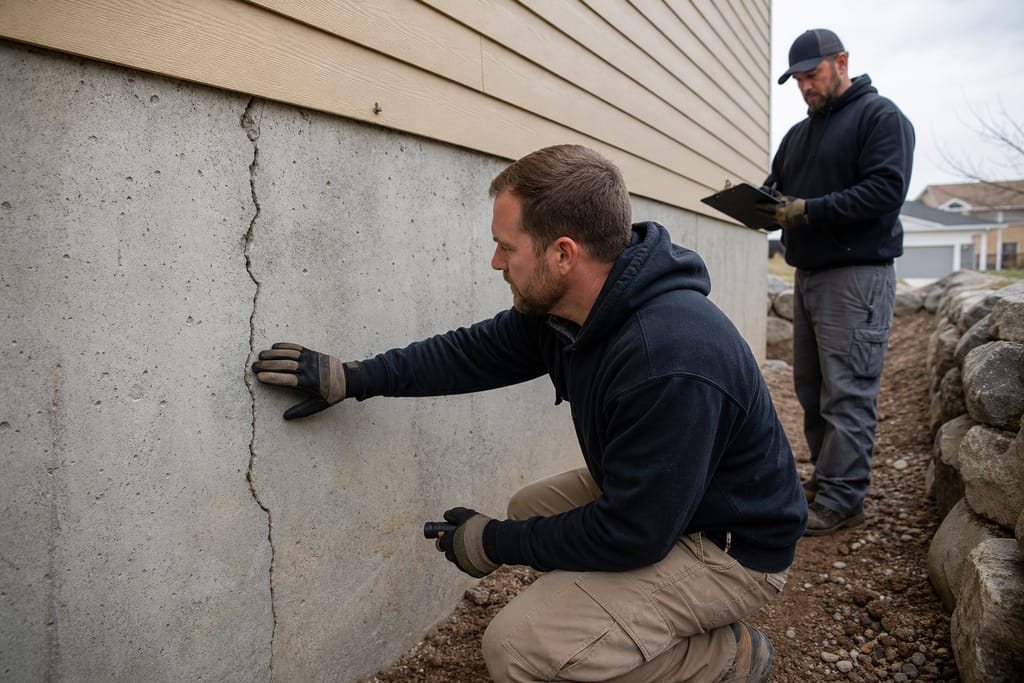
Wall Inspection
Technician checks for bowing, horizontal cracking, and leaning along the foundation wall.
 Step 2
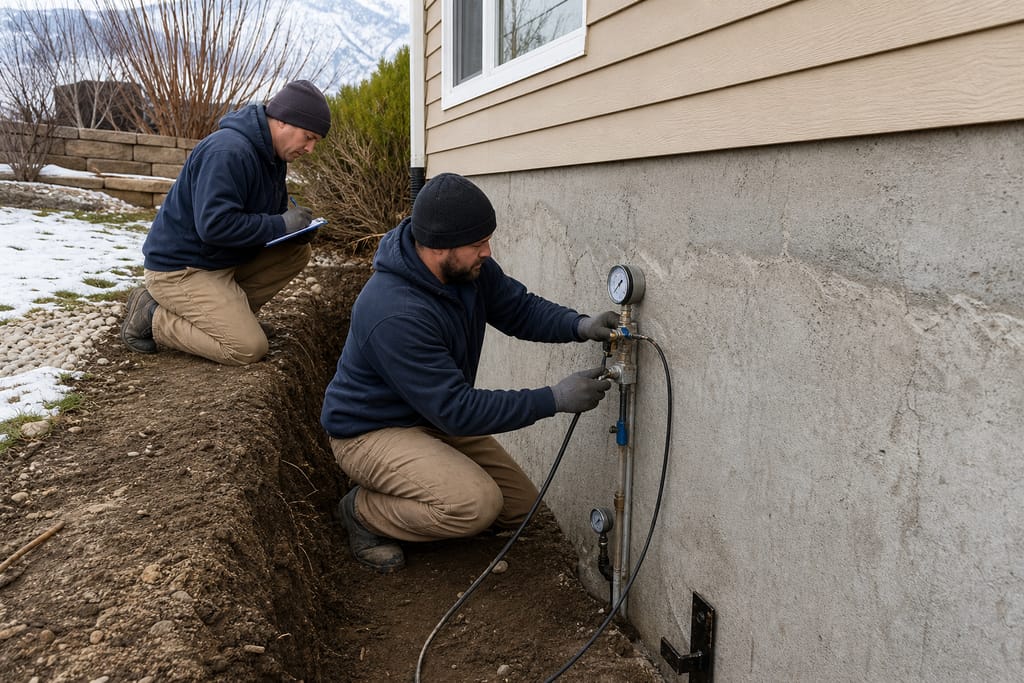
Pressure Assessment
Soil moisture and hydrostatic load behind the wall get evaluated for severity.
 Step 3
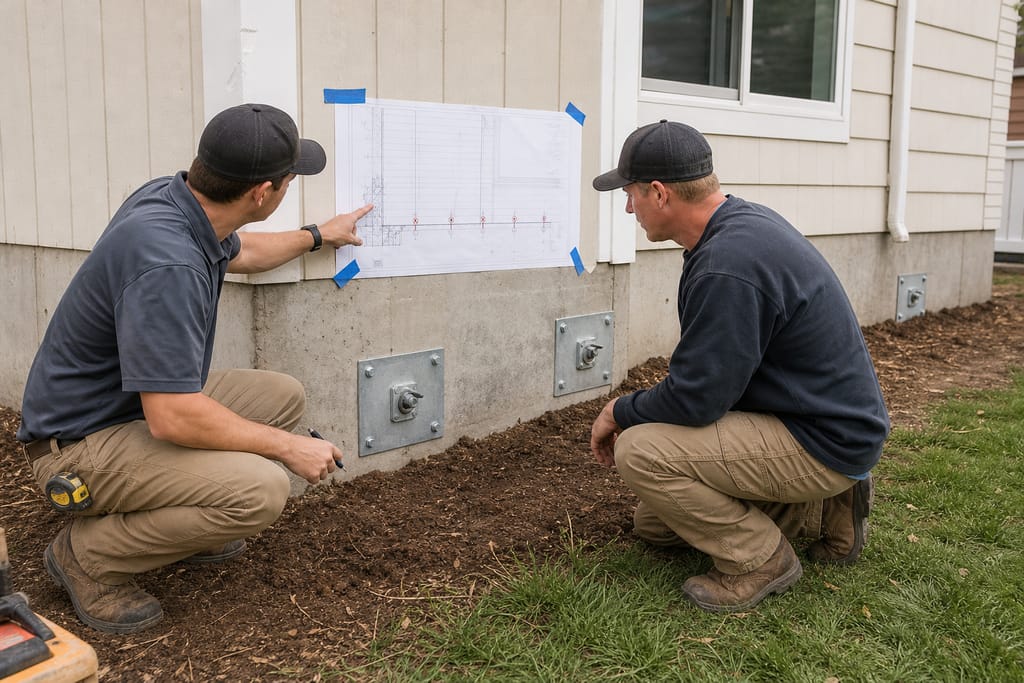
Reinforcement Planning
Anchor or strap method is chosen based on bow depth and wall condition.
 Step 4
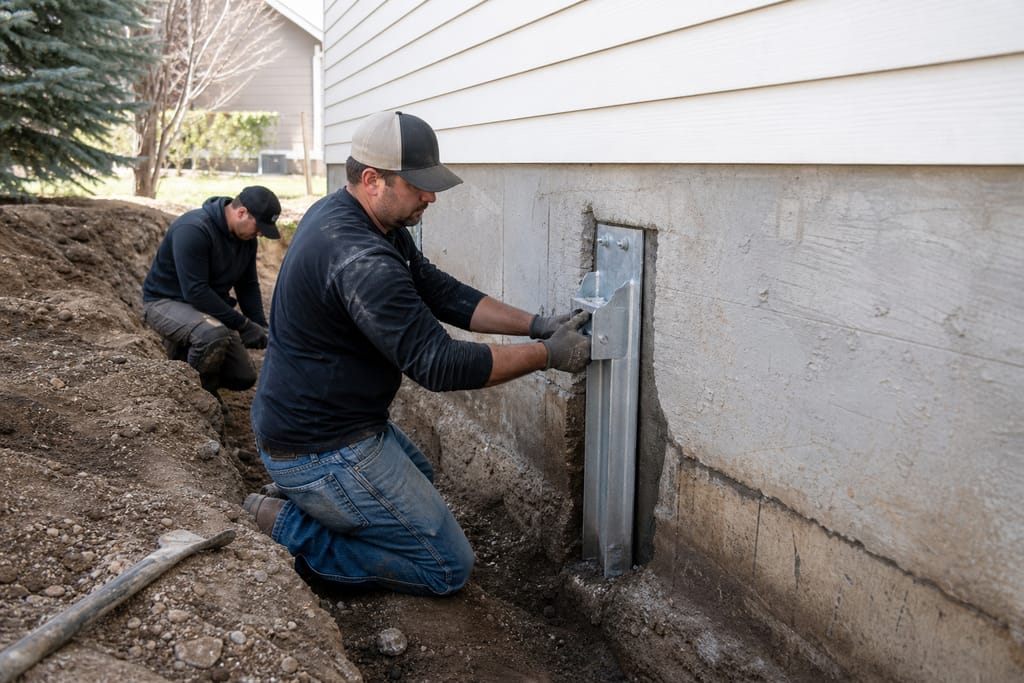
Anchor Or Brace Installation
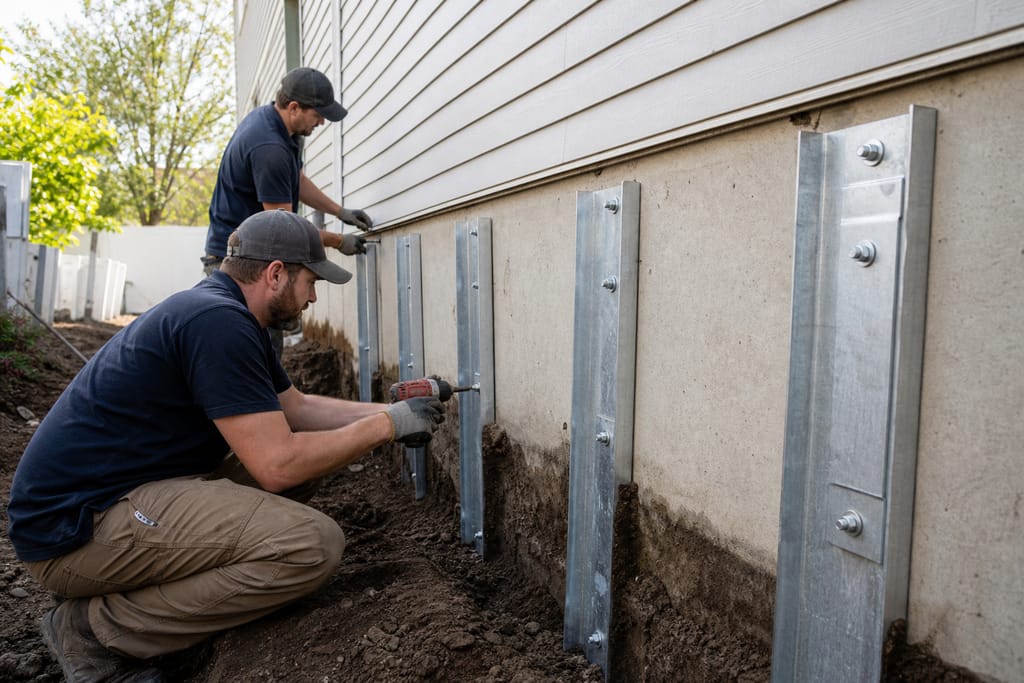
Steel anchors or carbon fiber straps go in to stop further movement.
 Step 5
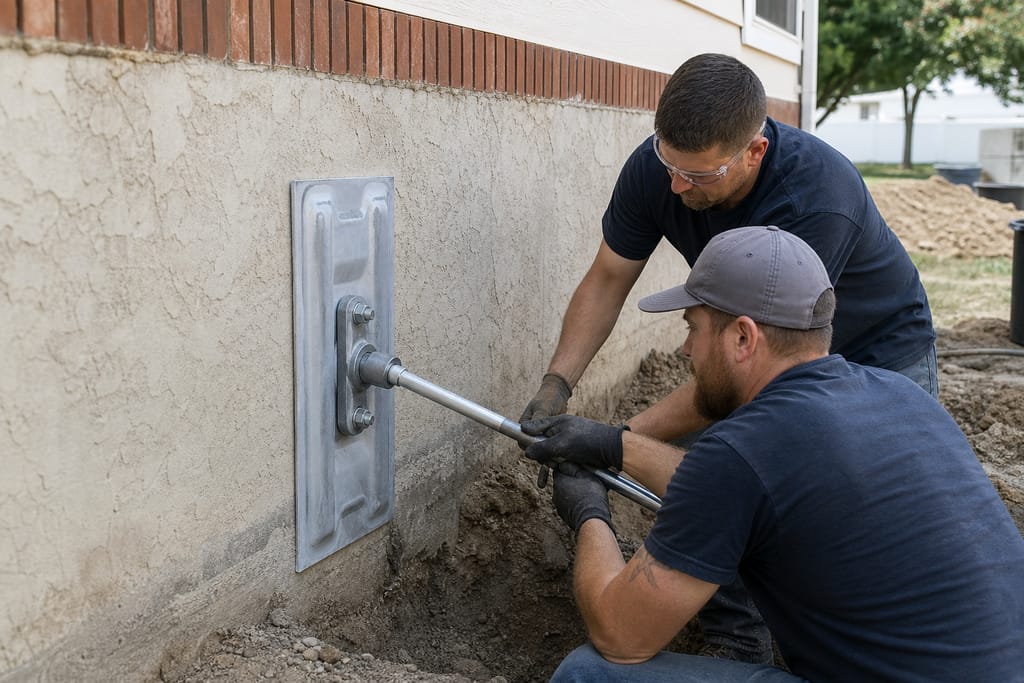
Tensioning Adjustment
Anchors get tightened gradually to nudge the wall back toward plumb.
 Step 6
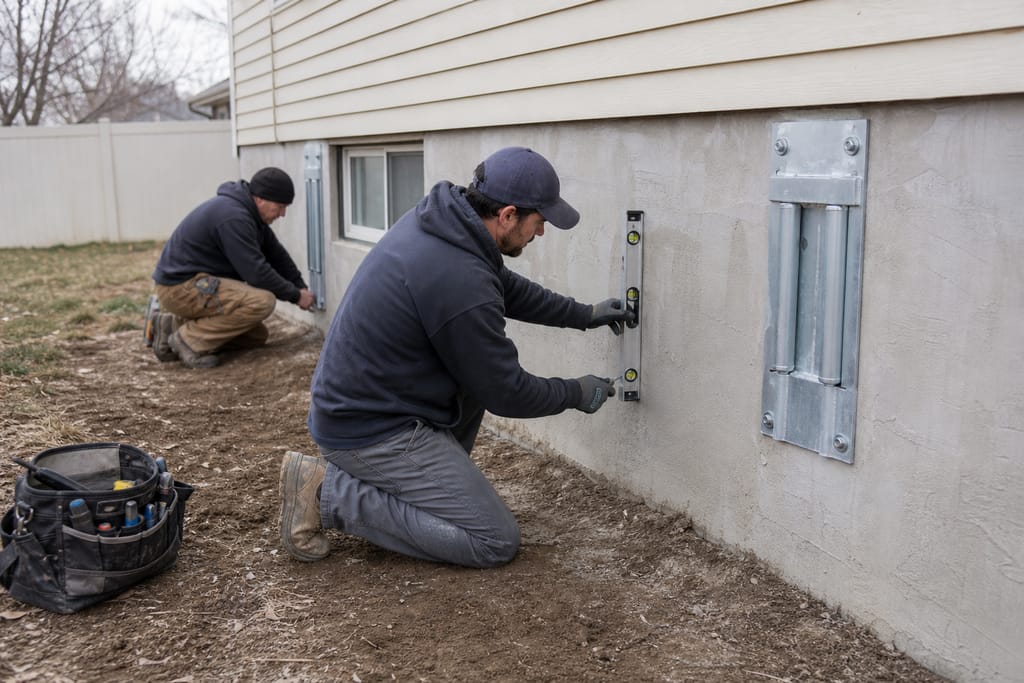
Final Inspection
Wall is rechecked for stability and proper anchor plate seating.
Materials
Materials and methods for Wall Stabilization
Eagle Mountain basement walls take a beating from spring runoff pushing against bench-lot clay. We match the bracing method to how far the wall has already moved.
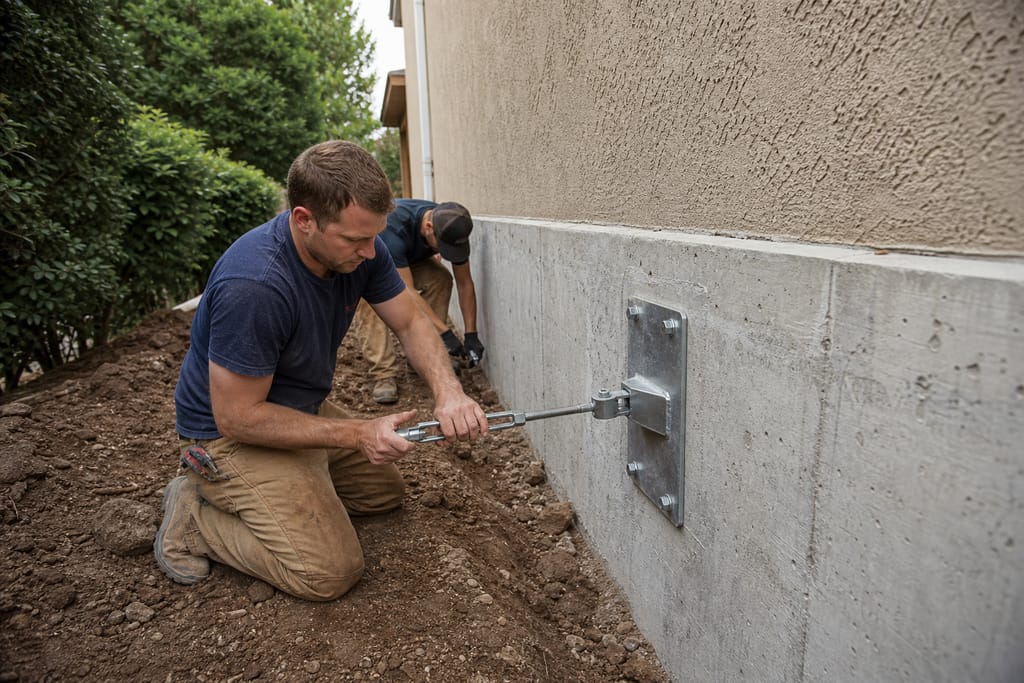
Wall Anchors
Set out in the yard and tensioned to pull the wall back against inward soil pressure, built for homes where the bow has advanced.
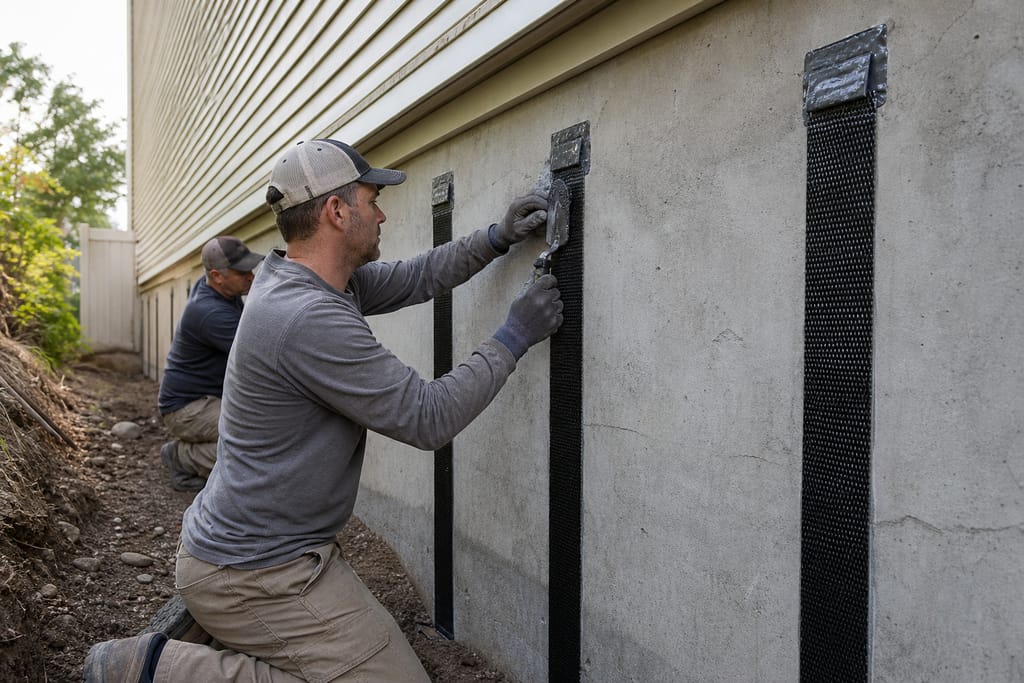
Carbon Fiber Straps
Bonded directly to the wall when the bow is still minor, avoiding yard excavation on tighter Eagle Mountain lots.
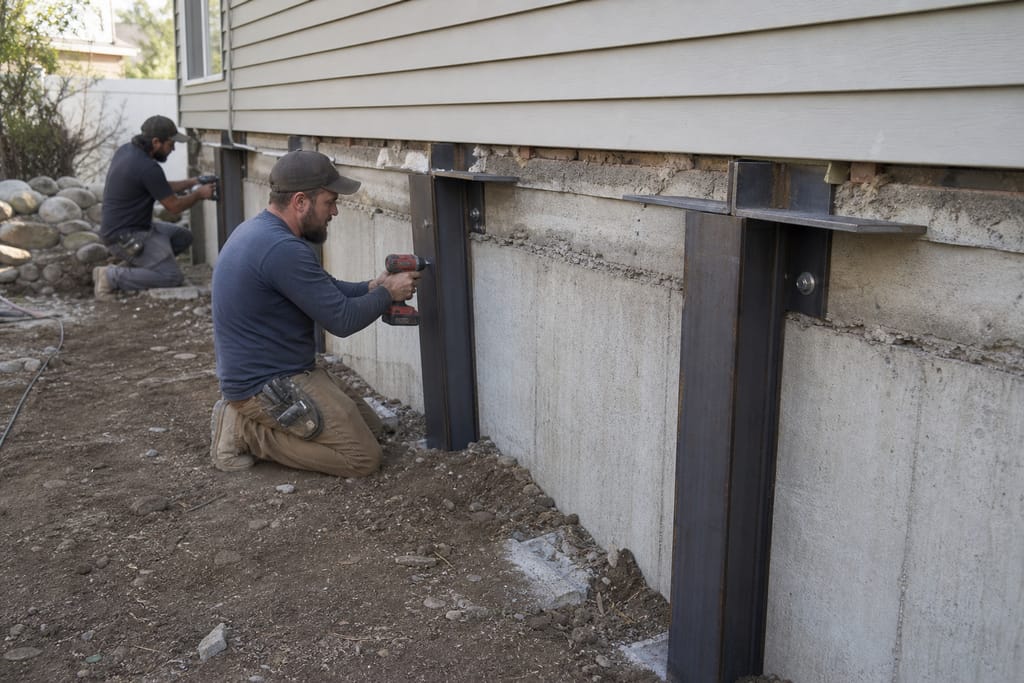
Steel I-Beams
Installed against the wall for added rigidity on severe bowing cases where anchors alone aren't enough.
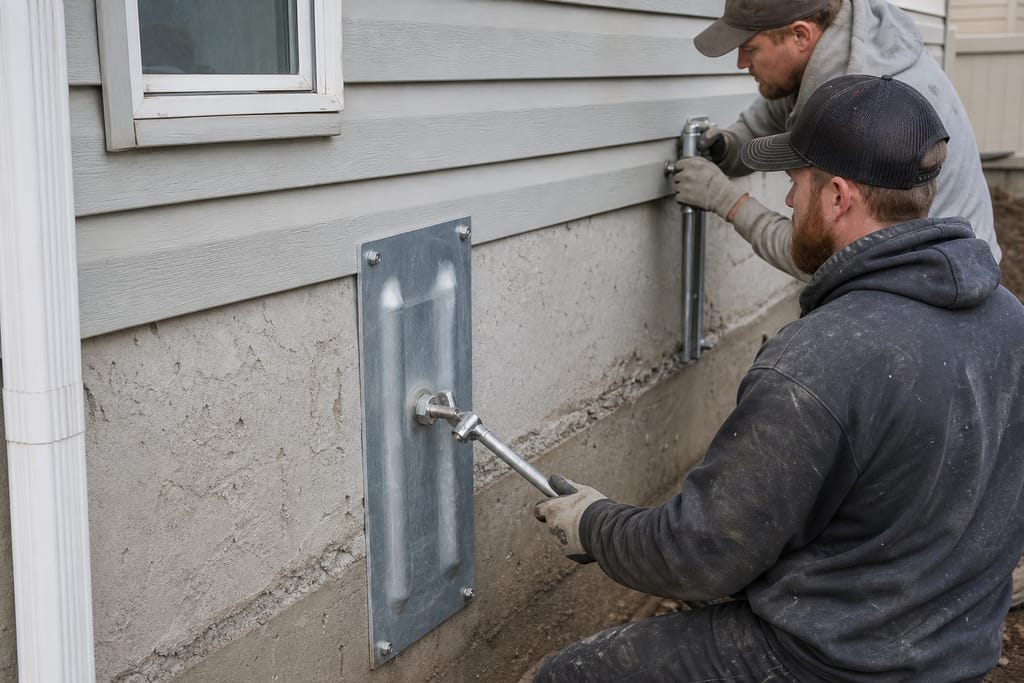
Wall Plates
Spread anchor tension evenly so the wall doesn't crack further at a single pressure point.
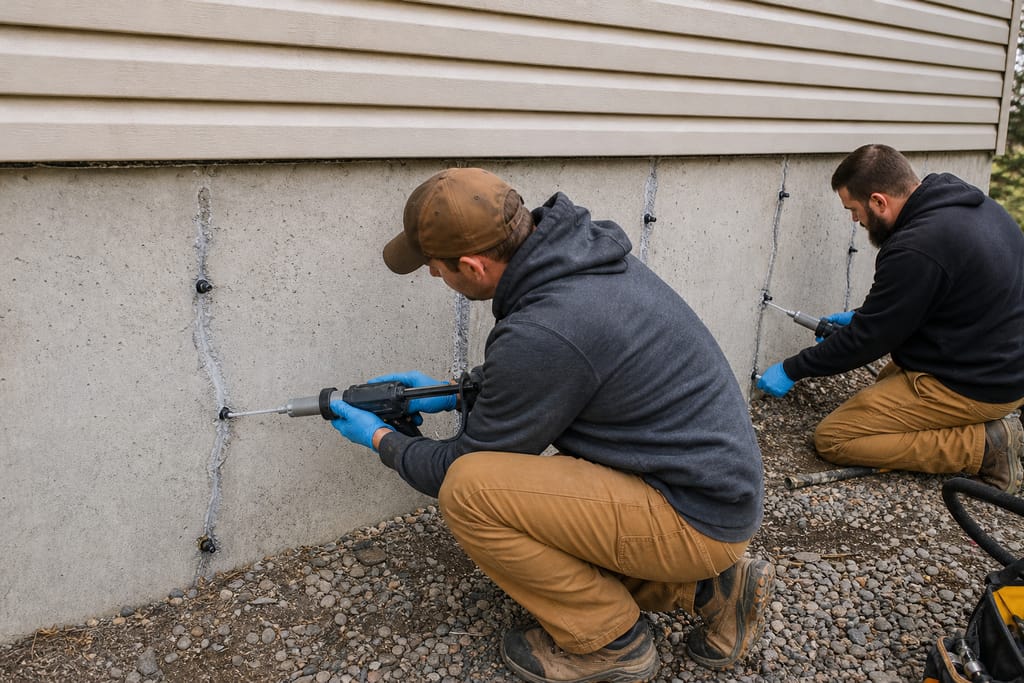
Epoxy Crack Filler
Seals existing cracks before reinforcement goes in, so water isn't tracking behind the new bracing.
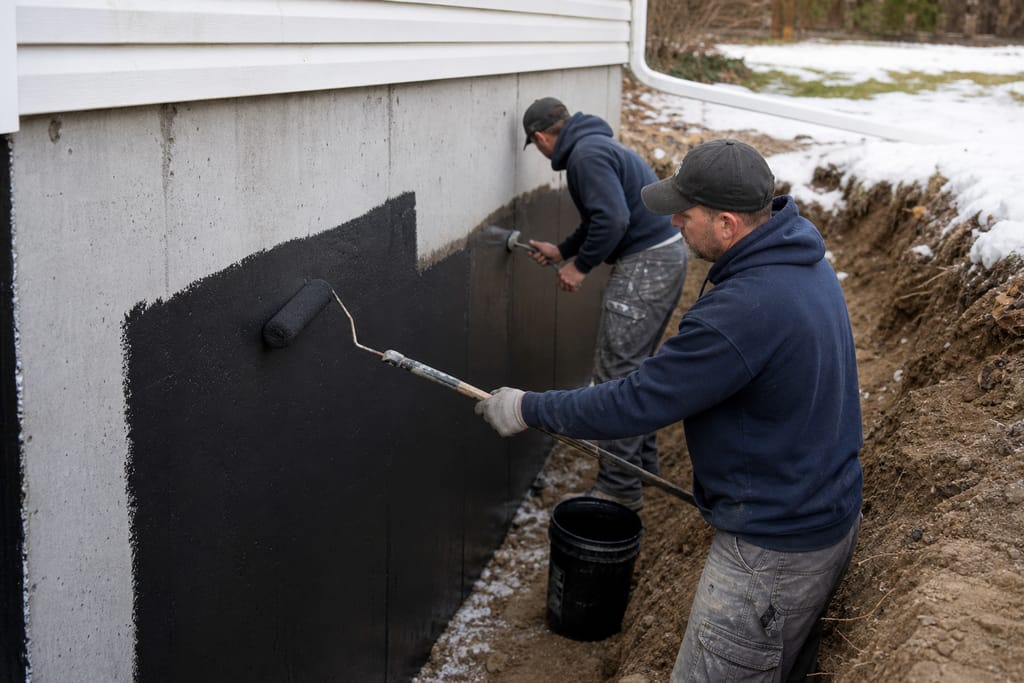
Moisture Barrier Coating
Applied after stabilization to cut down on the hydrostatic pressure driving the problem in the first place.
Questions on materials?
Get a Free EstimateTimeline
How long does a Wall Stabilization take?
Most jobs run over one to two visits depending on wall length and whether yard excavation is needed for anchors.
- 01
Inspection and plan
same day - 02
Anchor or strap installation
1 day - 03
Tensioning and adjustment
1 day - 04
Final recheck
2 weekswithin of install
Need a schedule that fits?
Get a Free EstimateBefore & after
Before and after Wall Stabilization results
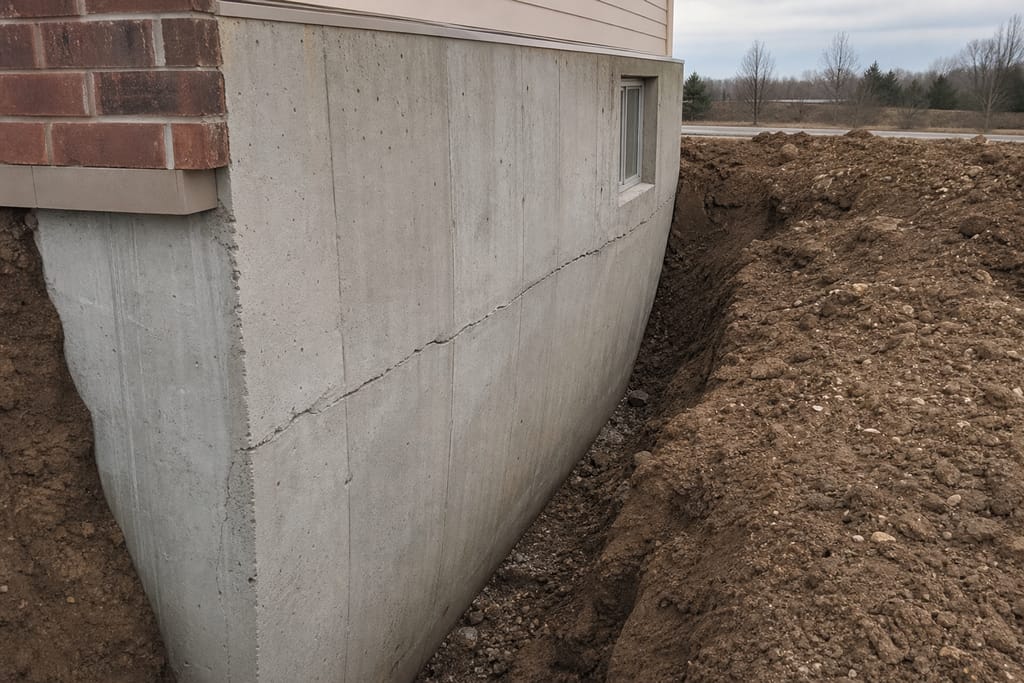
Before 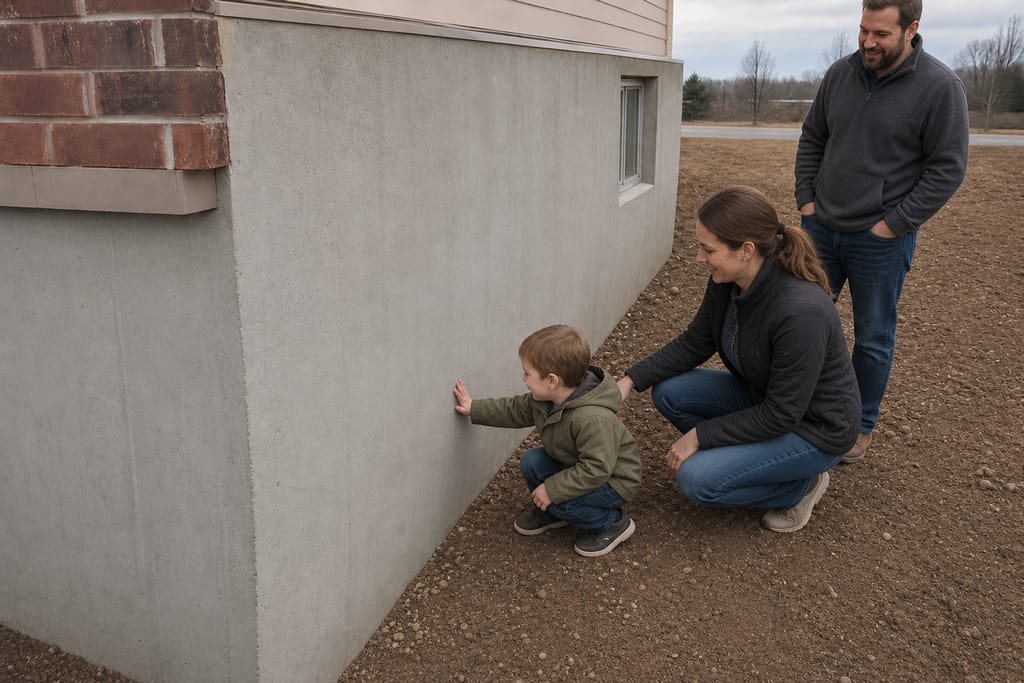
After
FAQs
Wall Stabilization FAQs
How do I know if my wall needs anchors or straps?
Anchors work better once the wall has moved enough that you need to pull it back, while carbon fiber straps are suited to walls that are cracking but still close to plumb. A free inspection settles which one applies to your wall.
What does wall stabilization cost in Eagle Mountain?
Pricing depends on wall length, bow severity, and whether anchors require yard excavation. We give you a written range after the inspection, not a phone-quote guess.
Will stabilizing the wall stop it from bowing further?
Once anchors or straps are tensioned and secured, the wall stops moving inward. It won't pull the wall fully back to original plumb overnight, but it halts further progression.
Do I need a permit for wall anchor installation?
Structural wall bracing typically needs a permit since it affects the load path of the foundation. We handle filing on jobs that require it.
Can I fix a bowing wall myself?
Sealing a hairline crack is fine to DIY, but tensioning anchors or straps requires load calculations most homeowners don't have the equipment or training for. A misjudged install can make the bow worse.
What happens if I wait to fix a bowing wall?
The wall keeps moving with each wet season, and what starts as a strap-level fix can turn into a full rebuild if left long enough.
Next step
Get a Wall Stabilization estimate in Eagle Mountain
Call (435) 296-4086 or request a free estimate. We'll check the bow, explain the cause, and give you a written plan before any anchor goes in.
More services
Other Foundation Repair services
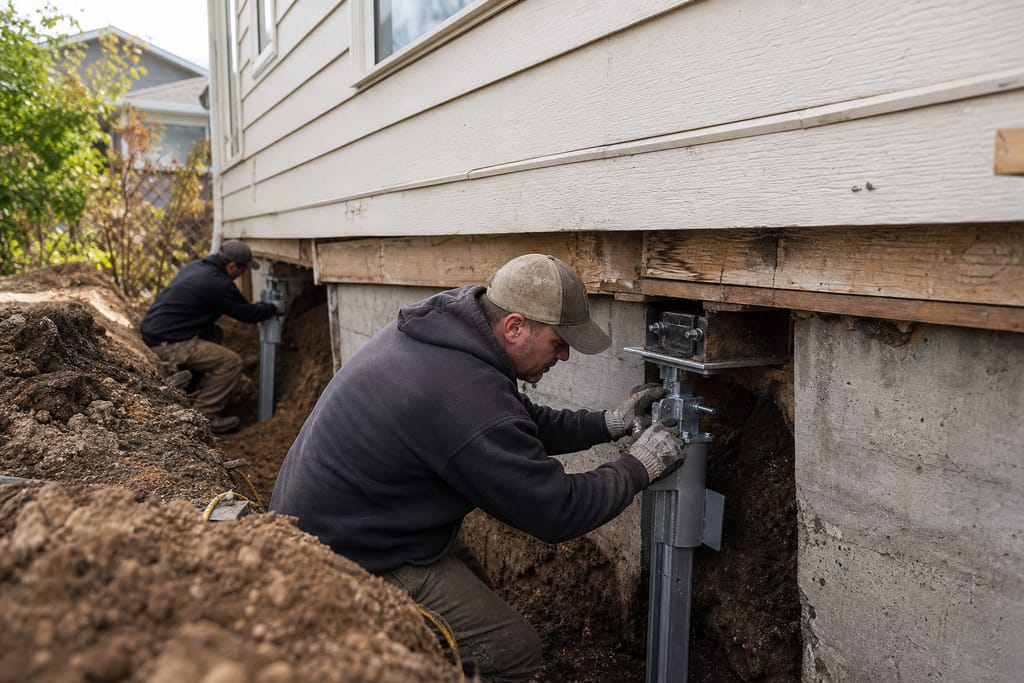
Foundation Repair
Foundation repair in Eagle Mountain using steel push piers, helical piers, and crack injection, with free estimates.
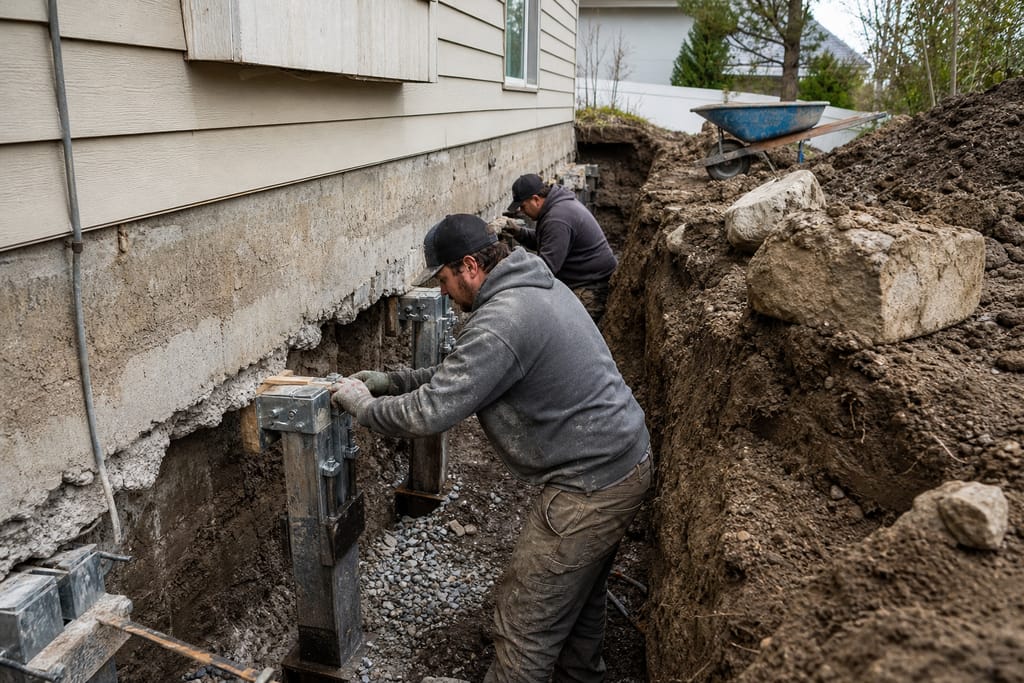
Piering and Underpinning
Steel push pier and helical pier underpinning in Eagle Mountain for settled foundations, with free estimates.
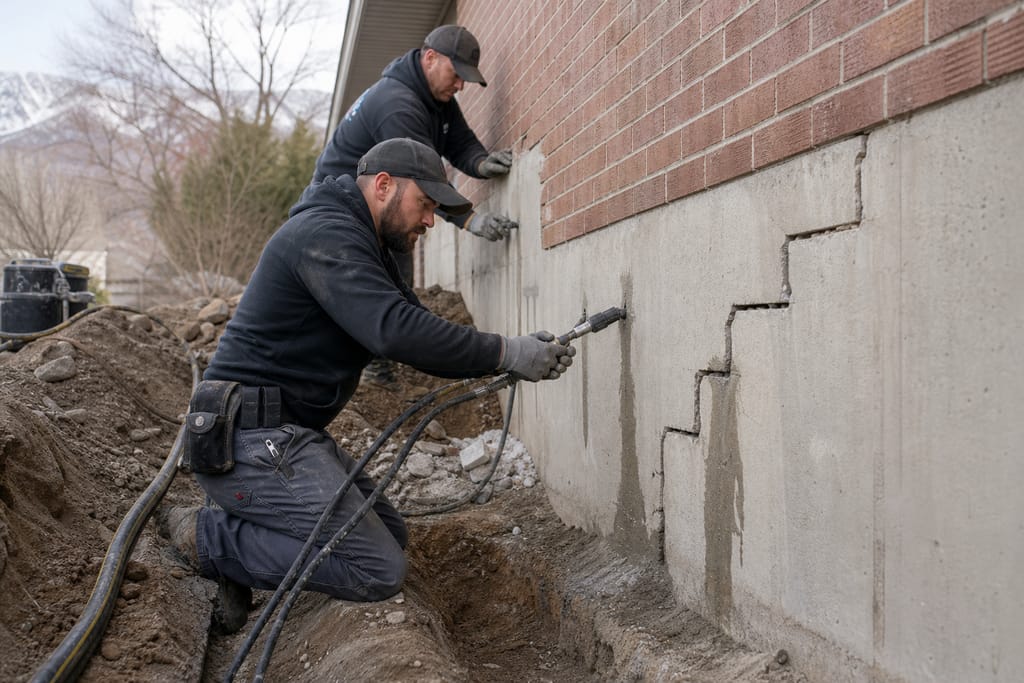
Foundation Crack Repair
Foundation crack repair in Eagle Mountain, UT with epoxy and polyurethane injection, free inspection before any work is scheduled.
Ask about Wall Stabilization
Tell us about the project and how to reach you.